





Older dogs and arthritis
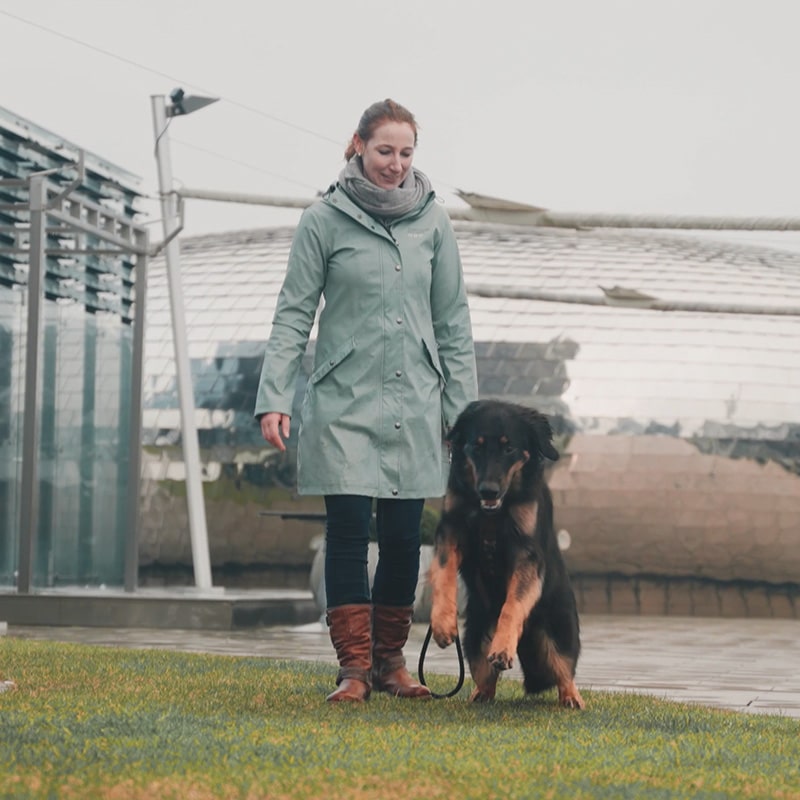
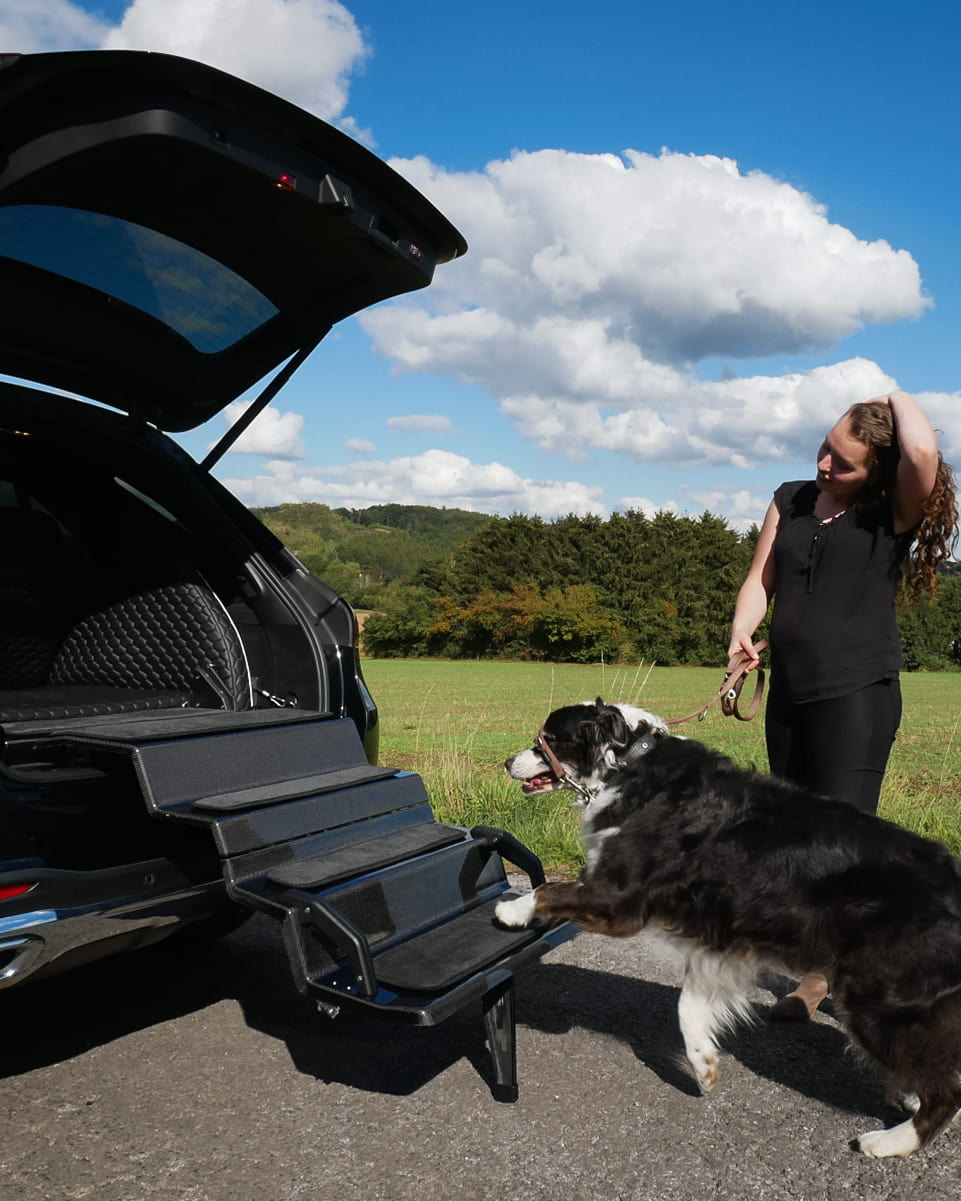
Senior dogs often hesitate at high jumps, especially when stiffness or arthritis is present. A staged climb can make access feel more manageable and may help reduce discomfort associated with hard landings.
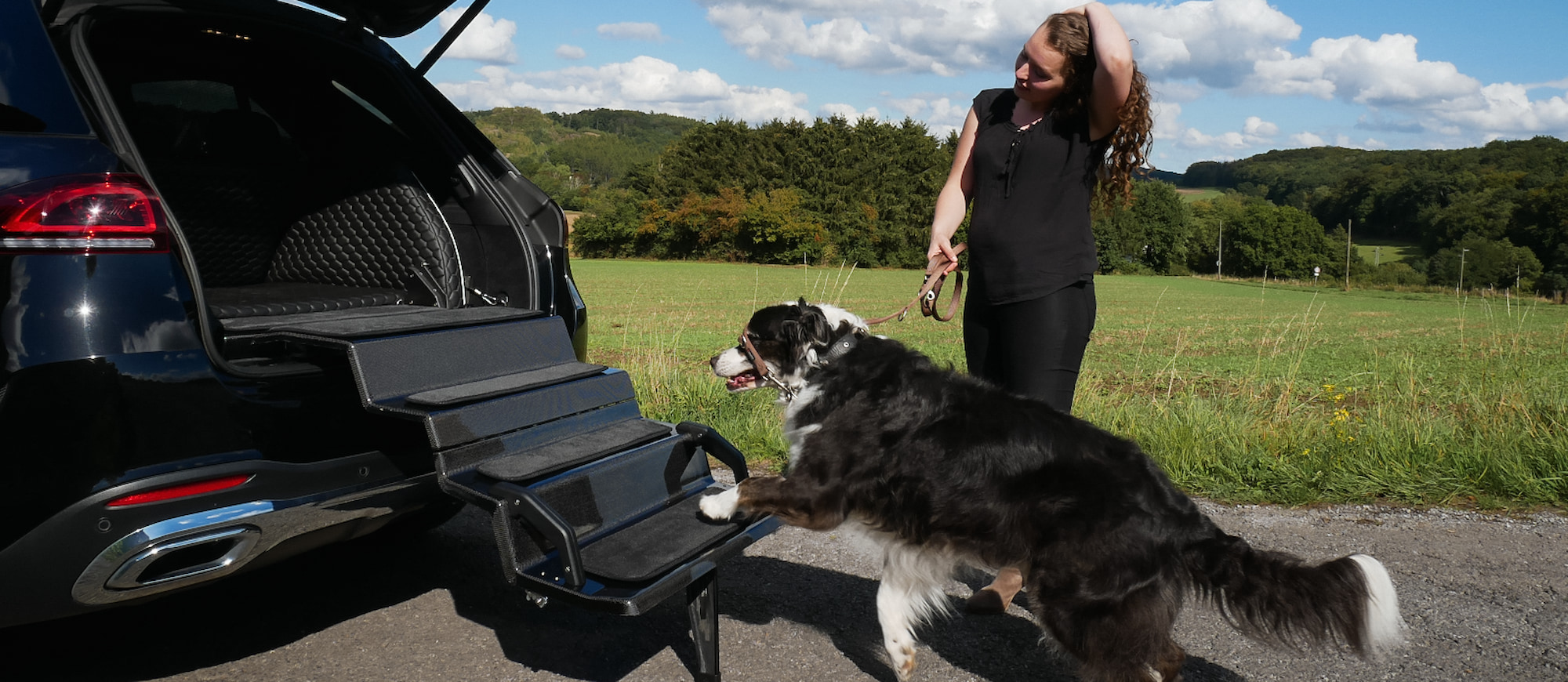
Young dogs can look fearless—but growth plates and developing joints don’t benefit from repetitive heavy impacts. Training a puppy to use steps early builds a joint-friendly habit they keep for life.
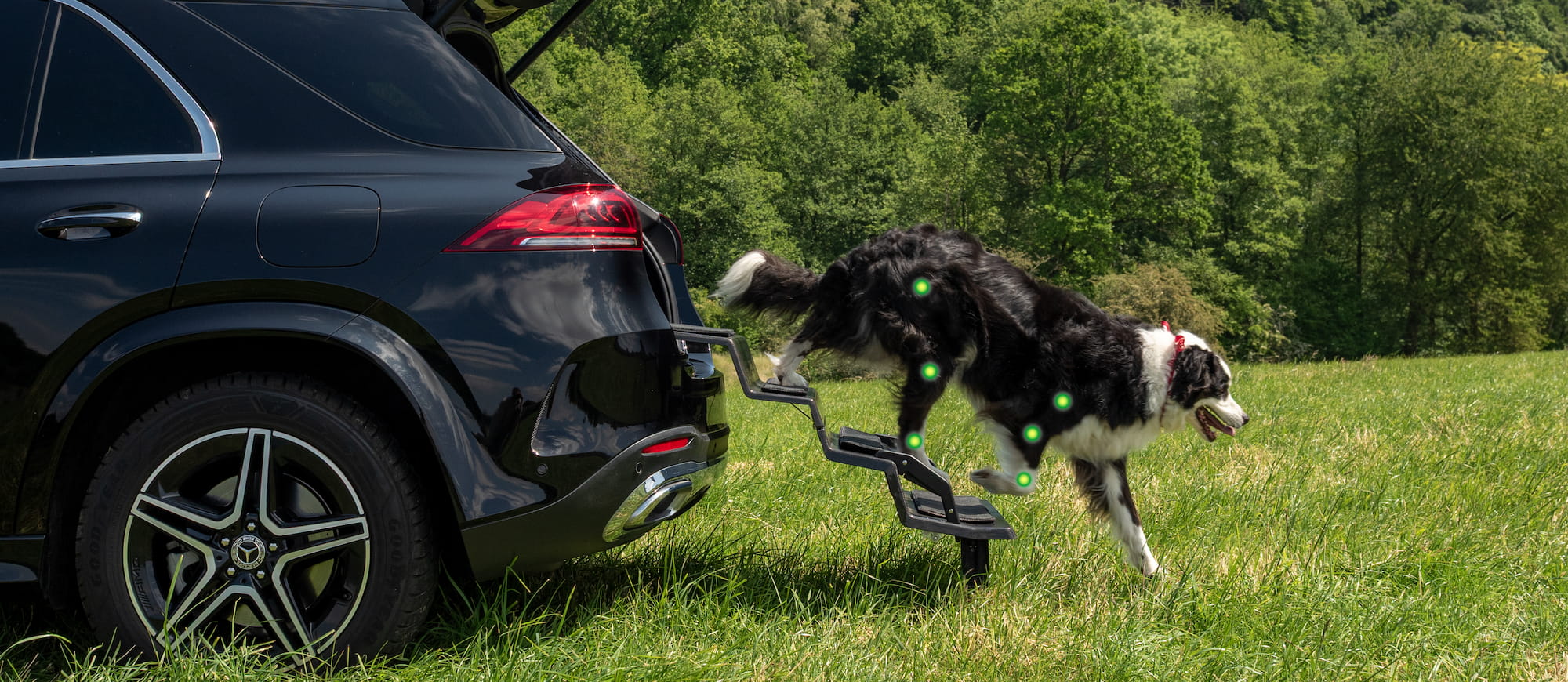
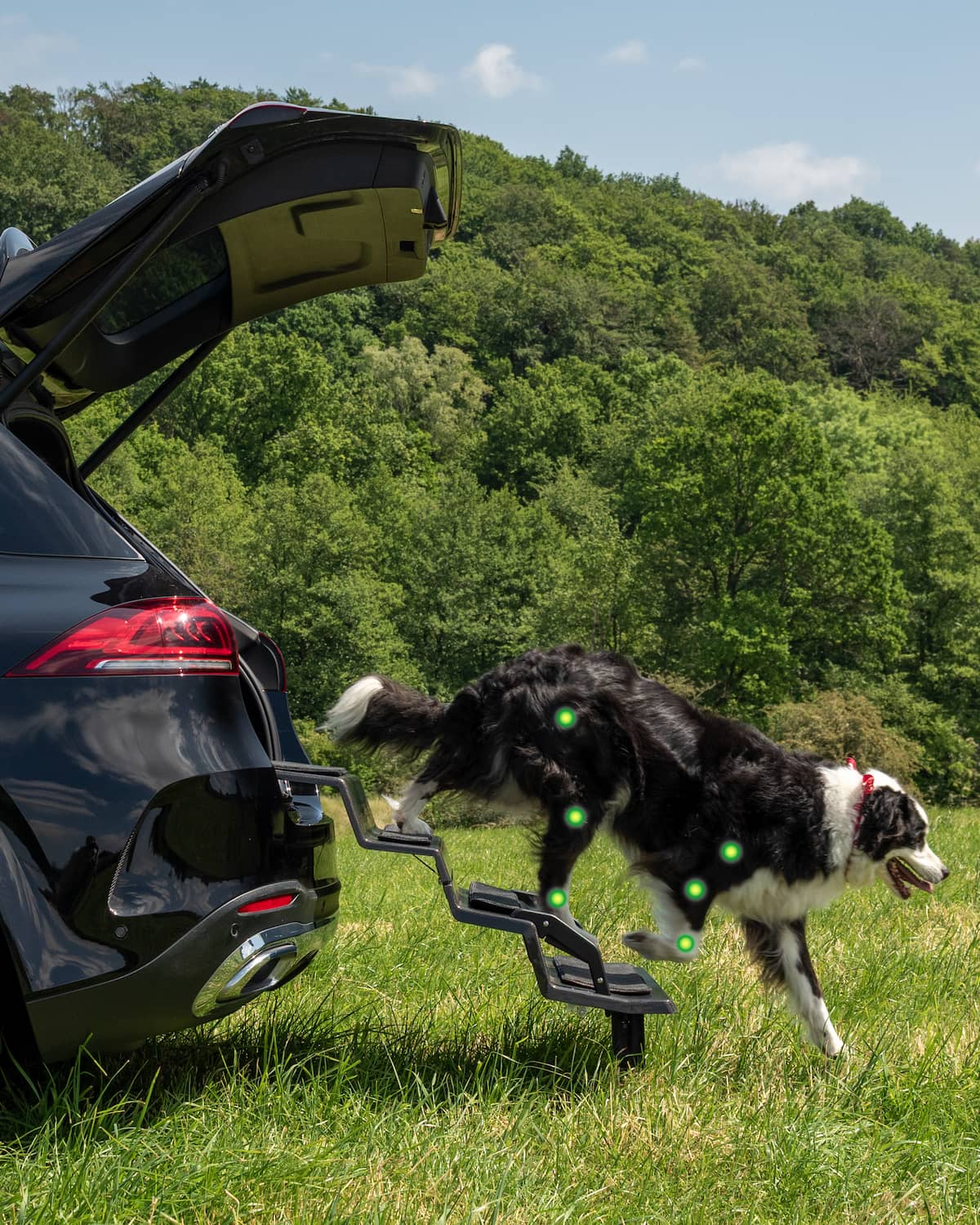
The heavier the dog, the greater the load through joints on landing. For larger breeds, avoiding a single drop from boot height can be particularly helpful—replacing it with a steadier climb down in stages.
If your vet has said “no jumping”, car access becomes a practical problem. Steps (or a ramp) allow controlled movement in and out of the boot without a leap that could aggravate recovery.
Hartpury’s findings back up what many owners already sense: jumping from the boot is an awkward movement with higher risk, whatever the dog’s age.
We treat the rear of the car as one system. Steps, fibreglass-mesh crate and fitted cushion turn the open boot into a defined, safe space:
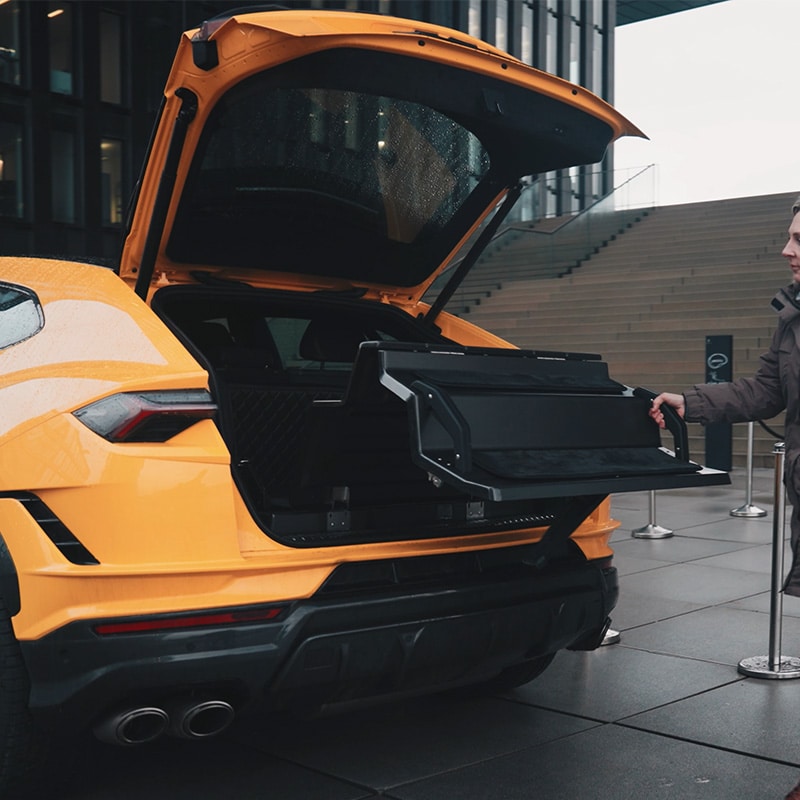
Steps break one large jump into small, controlled movements, matched to vehicle height and dog size.
Fibreglass-mesh crate uses the boot space properly, stays rigid and ventilated, and can be fixed securely to the car.
Fitted cushion and surround create a calm lying area and shield the boot floor and side panels from claws, moisture and dirt.
Because each part is built around a specific car, the result is a clean layout, clear routes for the dog and a familiar place on every journey – with calmer, more joint-friendly entries and exits.
Enquiring about:
To provide you with the best possible experience on this website, we use technologies such as cookies to store and/or access information on your device. If you consent to these technologies, we may process data such as your browsing behaviour or unique IDs on this website. If you do not consent or withdraw your consent, this may affect certain features and functionality.
If you have individual wishes for the configuration of your Dog&Drive system, please enter your contact details here. We will get back to you.
Adding {{itemName}} to cart
Added {{itemName}} to cart